
DVS: Moisture Sensitivity Decides Formulations. Can You Compare Isotherms Across Programs?
Your preformulation team runs DVS on every polymorph candidate. The formulation group tests excipient hygroscopicity. Stability scientists track moisture uptake at ICH conditions. All of this data sits in SMS DVS software, TA Instruments VTI, and Hiden IGAsorp — in formats that make cross-compound comparison a manual exercise. ZONTAL governs every sorption isotherm, hysteresis loop, and kinetic equilibrium profile into a cross-program context graph where moisture behavior is always comparable.
DVS Data Complexity
Dynamic vapor sorption instruments generate moisture sorption/desorption isotherms critical for stability and formulation decisions. Gravimetric data, temperature/humidity programs, and crystallinity indicators are locked in vendor-specific formats with poor interoperability — making cross-compound comparisons manual and error-prone.
Preformulation scientists, solid-state characterization leads, formulation development scientists, and stability study managers all depend on DVS data — from polymorph screening through packaging selection to shelf-life prediction.
Specialized Instruments
DVS instruments from Surface Measurement Systems, TA Instruments, and Hiden Isochema each use proprietary data formats and control software with incompatible export schemas.
Complex Isotherm Data
Sorption and desorption isotherms produce paired humidity/mass-change datasets with hysteresis loops, kinetic equilibrium data, and multi-cycle profiles that require structured extraction.
Temperature/Humidity Programs
Multi-step humidity cycling at controlled temperatures generates time-series data with programmed ramp rates, hold times, and equilibrium criteria — all vendor-defined and format-specific.
Stability-Critical Context
DVS results directly inform stability predictions, polymorph screening, and formulation decisions. Disconnected data delays these assessments and risks inconsistent conclusions across programs.
Vendor-Neutral Sorption Data from Every DVS Instrument
DVS data from different vendors uses incompatible file formats and export conventions — Surface Measurement Systems DVS data files, TA Instruments VTI-SA exports, Hiden Isochema IGAsorp outputs, ProUmid SPSx datasets. ZONTAL extracts gravimetric sorption data, isotherm curves, and kinetic equilibrium profiles into a governed, searchable format with full experimental context preserved.
Vendor-Neutral Moisture Characterization From Day One
- Isotherm-aware extraction: Sorption and desorption phases are distinguished, hysteresis loop structure is preserved, and equilibrium criteria are captured — maintaining the full scientific meaning of each experiment as it was designed.
- Multi-vendor support: Surface Measurement Systems, TA Instruments, Hiden Isochema, and ProUmid instruments are all supported — from single-sample research instruments to high-throughput screening configurations.
- Complete humidity programs: Programmed humidity ramp profiles, hold temperatures, equilibrium criteria (dm/dt thresholds), and multi-cycle definitions travel with every dataset — enabling method-level comparison across instruments.
- Kinetic equilibrium data: Mass change versus time data at each humidity step is captured at full resolution — supporting detailed kinetic analysis beyond the standard isotherm summary.
Contextualized DVS Data
Raw sorption results gain meaning when connected to their full scientific context. ZONTAL links every isotherm, mass change measurement, and humidity profile to the compound, polymorph form, temperature program, and experimental conditions that produced it.
Sorption/Desorption Isotherms
Complete isotherm curves — including hysteresis loops, kinetic equilibrium data, and multi-cycle profiles — are captured with full humidity step resolution and mass sensitivity metadata.
Temperature & Humidity Programs
Programmed humidity ramp profiles, hold temperatures, equilibrium criteria, and cycle definitions are linked to every DVS experiment — enabling method-level comparison across instruments.
Sample & Compound Genealogy
Each DVS result traces back to its compound, polymorph form, batch, crystallization conditions, and development program — connecting moisture sensitivity data to the broader portfolio.
Context Graph
All DVS metadata feeds into ZONTAL's scientific context graph, connecting moisture sorption behavior to stability profiles, formulation parameters, and regulatory submission data.
Cross-Program DVS Intelligence
With DVS data governed and contextualized, ZONTAL enables analytical intelligence that connects moisture behavior to crystallinity changes, formulation decisions, and stability predictions across instruments, compounds, sites, and programs.
Cross-Compound Moisture Sensitivity
Your preformulation scientist screens five polymorph candidates and three salt forms for moisture sensitivity. ZONTAL ranks them by critical relative humidity, maximum uptake at 90% RH, and hysteresis magnitude — with every isotherm traceable to the exact sample, DVS instrument, and temperature program used.
Stability Prediction Inputs
The stability team needs to predict whether Form A will maintain crystallinity at 40°C/75% RH. ZONTAL feeds the DVS isotherm data — including the critical uptake threshold where amorphous conversion begins — directly into the predictive stability model, alongside XRD crystallinity trends and DSC thermal events from the same compound.
Formulation Screening Trends
Your formulation scientist tests 12 excipient blends for hygroscopicity. ZONTAL overlays the sorption isotherms with matched humidity programs, identifies which blends cross the 2% moisture uptake threshold, and links the DVS results to the parallel stability chambers tracking the same formulations.
Polymorph & Hydrate Assessment
During humidity cycling, a compound gains 5% mass between 50% and 60% RH — a signature hydrate transition. ZONTAL flags the step change, cross-references the XRD pattern at the same humidity condition, and alerts the solid-state team that the compound forms a monohydrate — with full provenance across both techniques.
Supported DVS Platforms
ZONTAL maintains converters for the DVS platforms used across pharma R&D for stability, formulation, and solid-state characterization studies.
| Vendor | Models / Platforms | Capabilities |
|---|---|---|
| Hiden Isochema | IGAsorp | Gravimetric sorption, dynamic atmosphere control |
| ProUmid | SPS Sorption Test System | Gravimetric sorption, multi-sample cycling |
| Surface Measurement Systems | DVS Adventure, DVS Intrinsic, DVS Resolution | Gravimetric sorption, organic vapors, high resolution |
| TA Instruments | VTI-SA+ | Gravimetric sorption, multi-temperature cycling |
Explore Connected Capabilities
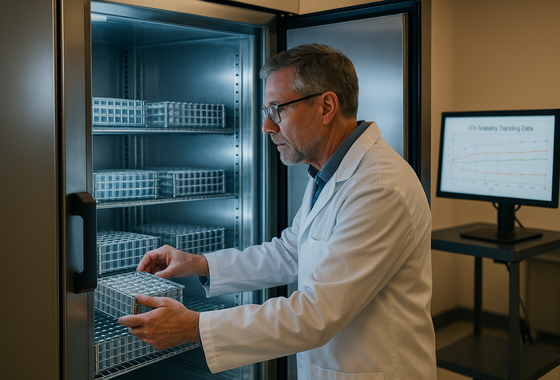
Stability Intelligence
DVS moisture data feeds predictive shelf-life models and stability trend analysis across your portfolio.

CMC Readiness
Governed DVS evidence packages supporting formulation and stability sections of regulatory submissions.

Governed Data Ingestion
DVS gravimetric data flowing through governed ingestion pipelines with full instrument and humidity program traceability.
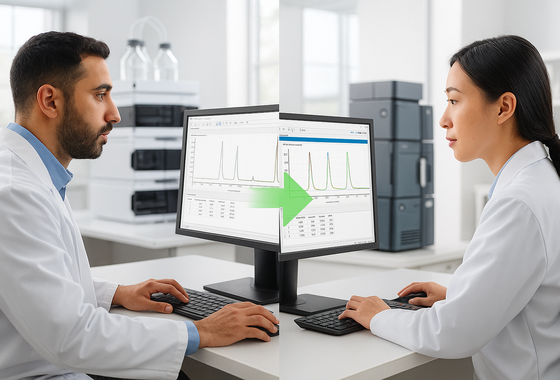
Tech Transfer
DVS methods and reference isotherms transferred between sites with matched humidity programs and comparable results.
Governed DVS Data Starts Here
From sorption isotherms to cross-program stability intelligence — connect your DVS through ZONTAL's scientific evidence infrastructure.