
Every Vendor Format. Every Fragment Ion. One Governed Search.
A new peak appears at m/z 487 in your stability batch. To resolve it, you need fragmentation data from Agilent, Bruker, Thermo, and Waters instruments across three labs — locked in four proprietary formats with no cross-vendor search. ZONTAL converts all of them to mzML, links every spectrum to its scientific context, and gives structural chemistry teams a single governed interface to search, compare, and overlay spectral data across the entire MS fleet.
Mass Spectrometry Data Complexity
Structural chemistry teams, metabolite identification groups, and bioanalytical scientists face the same problem: MS/MS fragmentation data is locked in vendor-specific raw formats — Agilent .d, Bruker .d, Sciex .wiff, Shimadzu .qgd/.lcd, Thermo .raw, Waters .raw — with acquisition parameters, tune files, and calibration records that must travel together for the spectral evidence to mean anything. Resolving an unknown impurity requires searching across all of them.
Vendor-Specific Raw Formats
Agilent .d directories, Bruker .d directories, Sciex .wiff binaries, Shimadzu .qgd/.lcd files, Thermo .raw files, and Waters .raw containers each encode spectral data differently. No universal format captures all vendor-specific metadata.
High Data Volumes
A single LC-MS/MS run can generate gigabytes of spectral data. High-resolution instruments like Orbitrap and timsTOF produce data volumes that strain traditional storage and retrieval workflows.
Complex Metadata
Ionization mode, collision energy, mass accuracy calibration, tune parameters, and acquisition sequences must accompany every spectrum — or downstream analysis loses its scientific validity.
Multi-Modal Workflows
MS data is rarely standalone. It couples with chromatography (LC-MS, GC-MS), imaging (MALDI), or ion mobility (timsTOF) — requiring integrated data models that span instrument modalities.
mzML Conversion & Cross-Vendor Spectral Unification
Every major MS vendor stores spectral data in proprietary formats — Agilent .d directories, Bruker .d directories, Sciex .wiff binaries, Shimadzu .qgd/.lcd files, Thermo .raw files, Waters .raw containers. ZONTAL converts all of them to mzML, the HUPO-PSI community standard for mass spectrometry data, then enriches each spectrum with governed metadata so you can search, compare, and overlay fragmentation patterns across your entire fleet from a single interface.
Vendor-Neutral Spectral Data From Day One
- mzML as the governed interchange format: ZONTAL converts every vendor-proprietary MS file into mzML — the open XML standard developed by HUPO-PSI and supported by ProteoWizard, OpenMS, MZmine, and the broader computational mass spectrometry ecosystem. Your data is no longer locked in vendor applications.
- Cross-vendor spectral overlay: Compare fragmentation patterns, isotope distributions, and extracted ion chromatograms from Agilent QToF, Bruker timsTOF, Thermo Orbitrap, Waters SYNAPT™, and Sciex TripleTOF side by side — in a single governed view, regardless of which instrument produced them.
- Full spectral fidelity: Centroid, profile, and continuum acquisition modes are preserved at native resolution. Collision energies, ionization parameters, and calibration context travel with every spectrum — no lossy conversion, no metadata loss.
- Hyphenated technique support: LC-MS, GC-MS, and ion mobility (IM-MS) workflows are handled as coupled datasets. Chromatographic retention, spectral m/z, and mobility dimensions are preserved together — enabling 3D separation science queries across your portfolio.
Contextualized Mass Spectrometry Data
A mass spectrum without its acquisition context is a pattern without meaning. ZONTAL links every spectrum and fragmentation result to its full experimental, sample, and instrument provenance.
Acquisition Parameters
Ionization mode, source conditions, collision energies, scan ranges, and resolution settings are captured and linked to every spectral dataset.
Calibration & Tune History
Mass calibration records, tune files, and detector voltage histories are preserved — enabling retrospective assessment of measurement accuracy.
Sample & Study Linkage
Each MS run traces to its sample preparation, compound identity, study protocol, and development program — connecting spectral evidence to its scientific purpose.
Context Graph
Mass spectral data feeds ZONTAL's scientific context graph, connecting fragmentation patterns, molecular identifications, and spectral libraries across the portfolio.
Cross-Program Mass Spectrometry Intelligence
With MS data converted to mzML and linked to its full scientific context, your structural chemistry, metabolite ID, and CMC teams gain cross-program intelligence that was impossible when spectra were locked in vendor silos.
Impurity Structural Elucidation
Search every fragmentation pattern your organization has ever produced — by m/z, neutral loss, or substructure — across all vendors and experiments. Resolve unknown degradation products against your own historical spectral library.
Cross-Platform Comparability
Compare mass accuracy, sensitivity, and fragmentation reproducibility across Orbitrap, QTOF, and triple-quad platforms — identifying instrument-dependent variability before it impacts method transfer or regulatory submissions.
Forced Degradation Pathway Mapping
Aggregate degradation product spectra across ICH stress conditions and time points. Build degradation pathway maps with governed spectral evidence — traceable from stressed sample through fragmentation to proposed structure.
AI-Assisted Spectral Matching
Governed mzML datasets with full acquisition context feed directly into ML-based spectral similarity engines and structural prediction models — enabling automated unknown peak annotation, metabolite prediction, and degradation product classification at portfolio scale.
From Data to Decisions — Automated MS Analysis
Governed spectral data is only the beginning. Mass spectrometry scientists need to visualize fragmentation patterns, automate routine processing, determine molecular formulas, and elucidate unknown structures — without switching between disconnected vendor tools.
Web-Based Mass Spectral Visualization
Browser-based MS viewing through Mnova Web — embedded directly in ZONTAL or in your ELN. Mass spectrometry scientists review fragmentation patterns, overlay spectra from different instruments, and compare isotope distributions without launching vendor-specific desktop software. One-click push to the full desktop application for advanced interpretation.
Automated Processing & Reporting
Gears automates MS processing, analysis, and reporting pipelines integrated with ZONTAL's governed data. Structure verification, metabolite screening, and impurity profiling run automatically upon data acquisition — generating standardized reports with pass/fail outcomes and flagging exceptions for expert review.
Molecular Formula Determination
Accurate mass of molecular ions, their fragments, and fine isotopic structure combine for automated molecular formula assignment. High-resolution data from Orbitrap, Q-TOF, and timsTOF instruments feeds directly into molecular formula ranking algorithms — shortlisting candidates that are further refined by integrating NMR information such as heteroatom counts (¹³C, ¹⁹F).
AI-Assisted Structure Elucidation
When unknown impurities appear in forced degradation or stability studies, ZONTAL's governed spectral library enables spectral similarity searching across the enterprise. AI-assisted matching against institutional and public databases identifies known compounds instantly. For novel unknowns, computer-assisted structure elucidation combines accurate mass MS/MS fragmentation with NMR correlation data to propose ranked structural candidates.
ZONTAL provides the governed spectral data backbone — SciY's analytical software (Mnova, Gears) provides the scientist-facing analysis, visualization, and automation layer. Mass spectrometry specialists work in familiar tools while ZONTAL governs every spectrum from acquisition to regulatory submission.
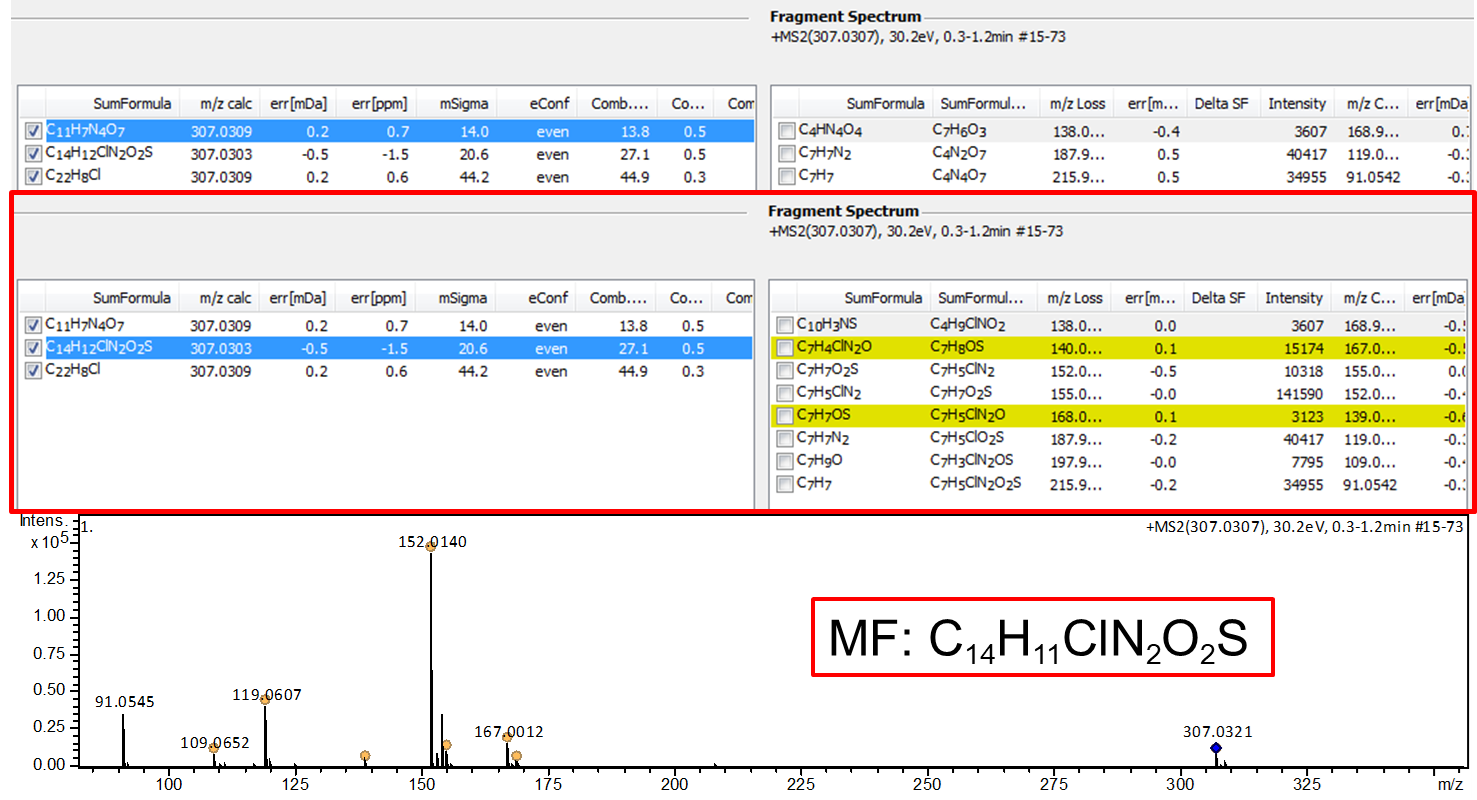
Supported Mass Spectrometry Platforms
ZONTAL converts data from the mass spectrometry platforms used across pharma R&D and manufacturing into mzML and the governed search index.
| Vendor | Models / Platforms | Raw Format | Techniques |
|---|---|---|---|
| Agilent Technologies | MassHunter, 6546 LC/Q-TOF, 6470 Triple Quad, 7850 ICP-MS, GC-MS | .d directories | LC-MS/MS, GC-MS, ICP-MS, ICP-OES, QTOF, MRM |
| Bruker | timsTOF, solariX, rapifleX, MALDI Biotyper, compact, amaZon | .d directories | LC-MS/MS, MALDI, Ion Mobility, HR-MS, GC-MS |
| Sciex | TripleTOF 6600+, ZenoTOF, QTRAP, X500R, SCIEX OS | .wiff / .wiff2 | LC-MS/MS, QTOF, MRM, HR-MS |
| Shimadzu | LCMS-9050, LCMS-8060, GCMS-QP2050, MALDI-8030 | .qgd / .lcd | LC-MS/MS, GC-MS, QTOF, MALDI, MRM |
| Thermo Fisher | Q Exactive, Orbitrap Exploris, Orbitrap Astral, TSQ, iCAP TQ, Xcalibur | .raw files | LC-MS/MS, GC-MS, HR-MS, ICP-MS, MRM |
| Waters | Xevo™ TQ-S, SYNAPT™ XS, SELECT SERIES, BioAccord™, QDa™, MassLynx™ | .raw containers, *Lynx reports | LC-MS/MS, QTOF, Ion Mobility, MRM, HR-MS |
Xevo™, SYNAPT™, MassLynx™, BioAccord™, and QDa™ are trademarks of Waters Corporation. All other trademarks are the property of their respective owners.
Explore Connected Capabilities
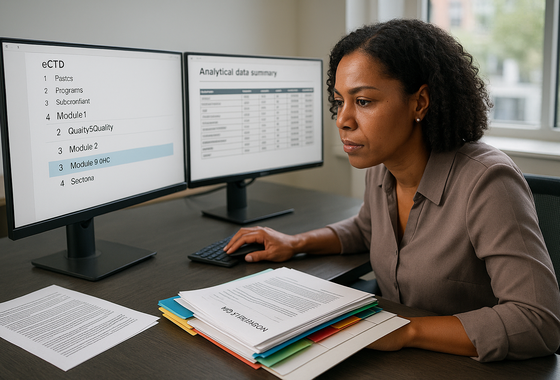
IND Acceleration
MS characterization data feeding directly into governed IND submission packages.

CMC Readiness
Spectral evidence packages assembled with full provenance for regulatory review.
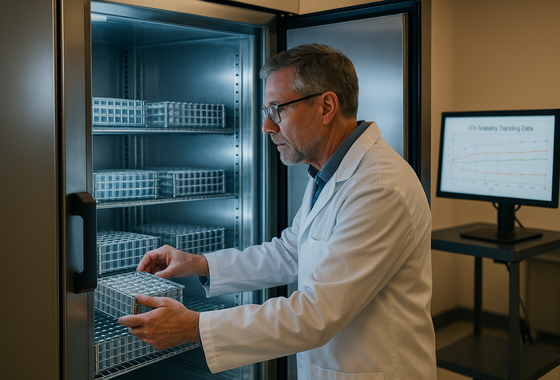
Stability Intelligence
Predictive shelf-life analysis
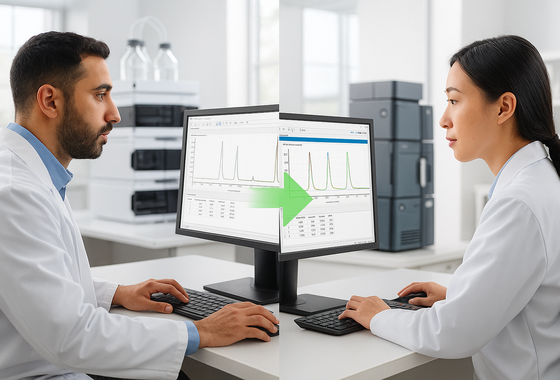
Tech Transfer
Site-to-site in weeks, not months
Governed Mass Spectrometry Data Starts Here
From raw spectral extraction to cross-program intelligence — connect your MS through ZONTAL's scientific evidence infrastructure.