
XRD: Every Polymorph Has a Diffraction Fingerprint. Can You Find It Across 10,000 Patterns?
Your solid-state team runs powder XRD on every crystallization hit, every stability pull, and every incoming API lot. Thousands of diffraction patterns accumulate in DIFFRAC.EVA, HighScore, and SmartLab Studio — in formats that make cross-program polymorph tracking a manual pattern-matching exercise. ZONTAL governs every diffractogram, peak list, and phase identification into a cross-program context graph where polymorphic forms are tracked automatically.
XRD Data Complexity
Powder XRD is essential for crystallinity assessment, polymorph identification, and stability studies in pharma R&D. High-throughput screening generates large datasets across multiple instruments. Phase identification requires reference database matching, and vendor formats vary significantly — making cross-instrument comparison unreliable without harmonized data governance.
Crystallographers, polymorph screening scientists, solid-state analytical leads, and QC diffraction analysts all depend on this data — from early polymorph discovery through GMP release testing to stability monitoring.
Multi-Vendor Landscape
Bruker DIFFRAC, Rigaku SmartLab Studio, Malvern Panalytical HighScore, and Stoe WinXPOW each store diffraction data in proprietary formats with different parameter representations and peak-search algorithms.
High-Throughput Scale
Polymorph screening campaigns generate hundreds of diffraction patterns per compound. Comparing patterns across batches, storage conditions, and time points requires governed data with traceable acquisition parameters.
Reference Database Matching
Phase identification depends on matching measured patterns against reference databases (PDF, CSD, ICDD). Different vendors integrate different databases — cross-system correlation requires harmonized peak lists and pattern data.
Regulatory Traceability
Every XRD result submitted to regulators requires a complete audit trail from raw diffraction data through processing parameters to phase identification — across instruments, methods, and sites.
Vendor-Neutral Diffraction Data from Every Diffractometer
XRD data from different vendors uses incompatible file formats and software ecosystems — Bruker DIFFRAC files, Rigaku SmartLab exports, Malvern Panalytical HighScore data, STOE WinXPOW datasets. ZONTAL extracts powder diffraction patterns, peak lists, and phase identification results into a governed, searchable format — so you can compare crystal forms, overlay diffractograms, and track polymorph stability across your entire diffractometer fleet.
Cross-Vendor Crystallographic Data From Day One
- Multi-vendor extraction: Bruker, Rigaku, Malvern Panalytical, and STOE diffractometers are all supported. Each vendor's software ecosystem — DIFFRAC.EVA, SmartLab Studio, HighScore Plus, WinXPOW — is handled with version-aware parameter extraction.
- Full diffraction fidelity: Raw diffractograms, peak positions, intensities, d-spacings, and phase identification results are preserved at native resolution — with background correction and peak-fitting parameters maintained for reproducibility.
- Cross-vendor pattern overlay: Compare powder diffraction patterns from different instruments and vendors in a single governed view — essential for polymorph screening, salt form selection, and process-induced transformation monitoring.
- Complete acquisition context: 2θ ranges, step sizes, scan speeds, X-ray source settings (Cu Kα, Mo Kα), detector types, and sample preparation conditions travel with every dataset.
Contextualized Diffraction Data
Raw diffraction patterns gain meaning when connected to their full scientific context. ZONTAL links every XRD measurement — peak positions, intensities, phase identifications — to the method, sample, instrument, and experimental conditions that produced it.
Acquisition Parameters
2θ ranges, step sizes, scan speeds, X-ray source settings, detector types, and sample preparation conditions are captured and linked to every diffraction measurement.
Peak & Phase Data
Peak positions, intensities, d-spacings, crystal structure parameters, and phase identification results are extracted with full traceability to the search-match methods used.
Sample Genealogy
Each diffraction pattern traces back to its sample preparation, batch, compound, and program — enabling cross-program queries that connect crystallographic behavior to formulation and process history.
Context Graph
All diffraction metadata feeds into ZONTAL's scientific context graph, connecting polymorphic forms, crystallinity indices, and phase stability data across the portfolio.
Cross-Program Diffraction Intelligence
With XRD data governed and contextualized, ZONTAL enables analytical intelligence — including Rietveld-refined phase quantification and variable-temperature diffraction tracking — that spans instruments, methods, sites, and programs.
Polymorph Tracking Across Programs
Your solid-state team discovers a new crystal form during scale-up of Compound X. ZONTAL searches every diffraction pattern across the portfolio — including early discovery screening from two years ago — and finds that the same 2θ signature appeared once in a failed crystallization batch, never flagged. The new form now has a complete genealogy linking process conditions to structural outcome.
Crystallinity Trending
Stability pulls at 3, 6, and 12 months show a subtle broadening of the (200) peak at 2θ = 21°. ZONTAL's trending dashboard quantifies the crystallinity index decline from 98% to 91%, correlates it with the DVS moisture uptake profile at the same time points, and alerts the stability lead before the next regulatory checkpoint.
Batch-to-Batch Comparison
Your toll manufacturer's first three production batches show a peak shift at 2θ = 14° compared to development batches. ZONTAL overlays the diffractograms with matched acquisition parameters — step size, scan speed, sample preparation — to determine whether the shift indicates a genuine polymorphic change or an instrument calibration difference.
Form Stability Monitoring
During a 36-month stability campaign, ZONTAL monitors 50 XRD patterns per compound per time point across six storage conditions. When Form I begins converting to Form II at the 25°C/60% RH condition at month 18, the automated alert fires before the next scheduled data review — with the VT-XRD temperature-dependent pattern available for root cause analysis.
Absolute Structure Determination — Full Sample Lineage
End-to-End Sample Lineage
ZONTAL preserves a single, workflow-aware digital thread from the originating ELN sample through shipment/receipt, crystallinity triage, recrystallization (when required), crystal selection, data collection, and downstream analysis. Every parent→child→child-of-child relationship is mapped explicitly — so the refined absolute structure traces back to the exact crystal instance, recrystallization condition, and original racemate.
Crystallinity Decision Gates
Workflow decision points are captured as governed events — not manual annotations. When material arrives at the X-ray lab, crystallinity assessment becomes the first formal gate: crystalline material proceeds directly to data collection, while amorphous material routes to recrystallization with full condition tracking across 12+ solvent systems.
Recrystallization Condition Tracking
Each recrystallization attempt generates first-generation child entities with explicit lineage preservation. Condition sets (solvent, temperature, method) are captured from standardized menus — ensuring consistent data capture across analysts and sites. Crystal selection creates further child-of-child entities (SampleS01, S02) preserving the full hierarchy.
Refinement & Stereochemistry Preservation
X-ray datasets and refinement outputs from specialist software are captured into the same governed workflow record. Absolute configuration assignments link to the complete provenance chain — from the originating synthetic batch through chiral separation, crystal growth, and diffraction data collection. Failed attempts remain traceable, ensuring no orphaned files or ambiguous provenance.
This workflow-aware approach delivers the requirement for standardized metadata, minimized manual steps, and consistent end-to-end execution — while preserving the hierarchical sample provenance necessary for defensible absolute structure determination across global sites.
Supported XRD Platforms
ZONTAL maintains converters for the X-ray diffraction platforms used across pharma R&D and manufacturing.
| Vendor | Models / Platforms | Software | Applications |
|---|---|---|---|
| Bruker | D8 ADVANCE, D2 PHASER, NANOSTAR | DIFFRAC.EVA | PXRD, Phase ID, SAXS, PDF Analysis |
| Malvern Panalytical | Empyrean, Aeris | HighScore Plus | PXRD, Phase ID, VT-XRD |
| Rigaku | MiniFlex, SmartLab | SmartLab Studio | PXRD, Crystallinity, SAXS, PDF Analysis |
| Stoe | STADI P | WinXPOW | PXRD, Polymorph Screening, VT-XRD |
Explore Connected Capabilities
Stability Intelligence
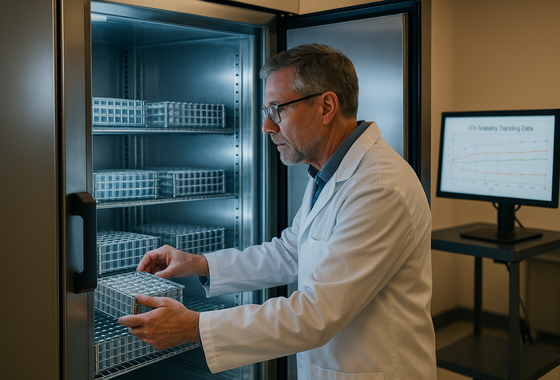
XRD stability data feeds predictive shelf-life and form-stability models across your portfolio.

CMC Readiness
Governed crystallographic evidence packages for regulatory submissions.

Governed Data Ingestion
XRD diffraction patterns flowing through governed ingestion pipelines with full instrument calibration and method traceability.
Tech Transfer
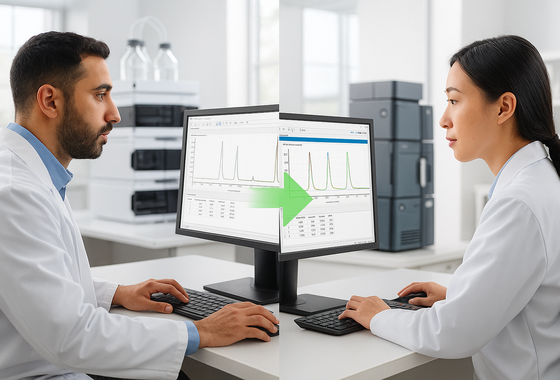
XRD reference patterns and phase identification methods transferred between sites with matched diffractometer parameters.
Governed XRD Data Starts Here
From diffraction pattern extraction to cross-program polymorph intelligence — connect your XRD through ZONTAL's scientific evidence infrastructure.