
Harmonize Multiple LIMS. One Governed Context.
Every acquisition brings another LIMS instance. LIMS (Laboratory Information Management System) consolidation connects LabWare, LabVantage, Sapio, SampleManager, STARLIMS, and other systems into a unified namespace — resolving identity conflicts, curating master data, and enabling cross-site visibility without rip-and-replace migration.
Acquisitions Multiply LIMS. Nobody Unifies Them.
After three or four acquisitions, a pharma organization may operate six to eight different LIMS systems with overlapping but incompatible data models. Cross-site reporting requires manual reconciliation. Method transfers require manual translation of LIMS-specific terminology. And every duplicate batch record increases regulatory risk.
Fragmented Systems
Each site runs its own LIMS — LabWare at one facility, SampleManager at another, STARLIMS at a third. No shared data model, no shared vocabulary, no shared context.
Identity Conflicts
LIMS A calls it BAT-0000328. LIMS B calls the same batch B328-TF6024. Sample IDs, method names, and test codes diverge across every system — manual reconciliation is the only bridge.
Duplicate Master Data
The same product, method, or specification exists in multiple LIMS with different naming conventions. Cross-site reporting requires analysts to manually map equivalent records before any comparison is possible.
Two Principles Working Together for Multi-LIMS Harmonization
Integrate extracts and normalizes data from heterogeneous LIMS instances. Contextualize resolves identity conflicts, curates master data, and builds governed context across fragmented systems.

Data Hub Connects Every LIMS Instance
Governed connectors extract and normalize data from LabWare, Thermo SampleManager, Abbott STARLIMS, and other LIMS platforms. Each connector handles the vendor-specific data model, API protocols, and export formats — so your teams never write custom integration code.
- Connectors for major LIMS vendors
- Vendor-specific data model translation
- Automated extraction and format normalization
- Consistent output regardless of source LIMS

Cross-System Reconciliation & Governed Master Data
Identity resolution maps equivalent records across LIMS instances — BAT-0000328 in one system is matched to B328-TF6024 in another. Master data curation establishes a unified sample, batch, and method namespace with governed audit trails across every connected system.
- Cross-system identity resolution
- Unified sample/batch/method namespace
- Governed master data curation with audit trail
- Workflow governance across sites via Operations Hub
Your Existing Infrastructure Is the Foundation
If your organization runs Data Hub, Digital Lab, or Operations Hub, the infrastructure for multi-LIMS harmonization is already in place.
Data Hub
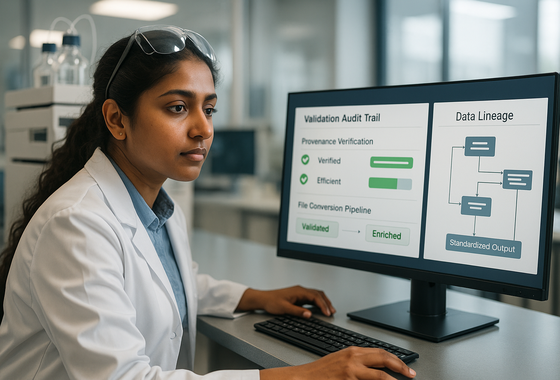
Your Data Hub deployment connects to your LIMS instances, converting and normalizing data from heterogeneous sources. The LIMS connectors extend this same governed conversion pipeline to additional systems from acquisitions.
Digital Lab
Your Digital Lab provides a unified workspace for scientific data. Cross-system reconciliation extends this context infrastructure to resolve identity conflicts between LIMS instances and build a single governed namespace.
Operations Hub
Your Operations Hub governs workflows across sites. For LIMS consolidation, it enforces consistent naming conventions, approval routing, and change control across every connected LIMS instance.
Beyond Harmonization — Cross-Site Intelligence
Once LIMS data is reconciled and governed, the platform unlocks capabilities that were impossible when each site operated in isolation — including the AI-ready scientific context graph that predictive analytics and cross-site intelligence require.
Cross-Site Method Transfer Tracking
When a method transfers from Site A to Site B, the platform tracks every parameter mapping between LIMS instances. Method equivalence is established through governed reconciliation, not spreadsheet comparison.
Unified Batch Genealogy
Batch records from every LIMS instance feed a single genealogy graph. Track a batch from raw material receipt at one site through intermediate processing at another to final release at a third — with full provenance at every handoff.
Portfolio-Level Visibility
Previously siloed LIMS data from acquired sites becomes queryable across the entire portfolio. Compare analytical results, stability data, and release metrics across all sites without manual data aggregation.
Regulatory-Grade Cross-Site Evidence
Generate regulatory submission packages that draw data from multiple LIMS instances with governed traceability to each source system. Auditors see a single consistent narrative, not a patchwork of site-specific exports.
AI-Ready Governed Context Graph
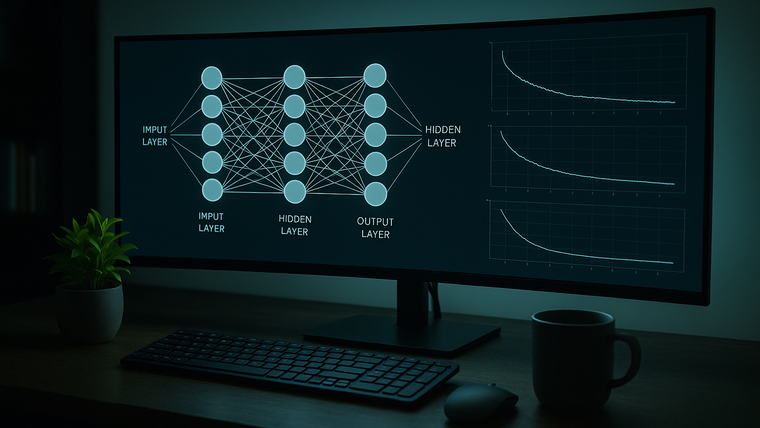
Harmonized LIMS data — with reconciled identities, unified vocabularies, and governed lineage — is ingested into a central index that AI models can consume directly. Predictive batch release, cross-site anomaly detection, and AI-assisted method transfer all depend on the reconciled, indexed dataset that LIMS consolidation creates. Without it, AI sees disconnected fragments, not a portfolio.
Consolidated LIMS data feeds directly into Scientific Intelligence and AI-Enabled Decisions — enabling cross-site predictive analytics, AI-assisted QC release, and portfolio-level anomaly detection.
Operational Results from LIMS Harmonization
Multi-LIMS consolidation delivers measurable improvements in reconciliation efficiency, data consistency, and cross-site operational visibility.
Cross-system reconciliation that previously required weeks of manual mapping completes in hours through automated identity resolution.
Unified master data with governed naming conventions and audit trails — every sample, batch, and method mapped to a single canonical identity.
Queryable data across all LIMS instances without manual aggregation. Portfolio-level reporting from previously isolated site databases.
From Harmonization to Cross-Site Intelligence
LIMS consolidation at Integrate and Contextualize creates the governed data foundation. Analyze adds cross-program analytics and stability intelligence across every reconciled site.
Foundation: Data Hub + Digital Lab + Operations Hub
Multi-LIMS connectors extract and normalize data. Cross-system reconciliation resolves identity conflicts. Operations Hub enforces governance across sites. This is your current LIMS consolidation infrastructure.

Next: Cross-Site Intelligence
With reconciled LIMS data, Analyze and Decide enable Stability Intelligence across sites, cross-program analysis, and portfolio-level decision support — capabilities that require unified, governed data from every connected system.

Trusted by 6 of the 10 largest pharmaceutical companies in the world










And leading biotechs and agrochemical companies
Build the Foundation for LIMS Consolidation
Connect your heterogeneous LIMS instances, resolve identity conflicts, and build governed cross-site context. Talk to our team about harmonizing your lab data landscape.