
Your Plate Reader Data Lives in a Thousand Spreadsheets. It Doesn't Have To.
Your screening lab runs CellTiter-Glo viability assays, HTRF binding panels, and AlphaScreen counter-screens across seven plate readers from four vendors. Every campaign exports to a different spreadsheet format. Comparing dose-response curves across programs means weeks of manual data wrangling. ZONTAL governs every plate read — well coordinates, assay protocols, and concentration series — into a cross-program context graph that makes IC₅₀ comparisons a query, not a project.
Plate Reader Data Complexity
Microplate assays generate massive datasets across 96, 384, and 1536-well formats. Each reader supports multiple detection modes — absorbance, fluorescence, luminescence, FRET, and AlphaScreen — with vendor-specific plate definitions, output formats, and kinetic time-series data per well. Consolidating results across instruments and programs requires manual export and reformatting.
Screening biologists, assay development scientists, and HTS coordinators all depend on plate reader data — from primary screens through hit confirmation to selectivity panels.
Multi-Mode Detection
A single plate reader supports absorbance (ELISA, BCA protein), fluorescence intensity (resazurin viability, calcium flux), time-resolved fluorescence (HTRF, TR-FRET), luminescence (CellTiter-Glo, reporter gene), and AlphaScreen — each producing distinct data structures and metadata requirements.
High-Density Formats
96, 384, and 1536-well plates produce thousands of data points per read. Kinetic assays multiply this by hundreds of time points, generating large time-series datasets per experiment.
Vendor-Specific Outputs
BMG LABTECH, Molecular Devices, Tecan, and PerkinElmer each export data in proprietary formats with different plate layout definitions, concentration curve models, and well-assignment schemas.
Plate Layout Complexity
Sample-to-well mapping, control well assignments, concentration series, and replicate patterns are defined per experiment — and must be preserved through data extraction to maintain result integrity.
Multi-Mode Microplate Data from Every Reader
Plate reader data lives scattered across vendor-specific formats — BMG MARS exports, Molecular Devices SoftMax Pro files, Tecan Magellan databases, PerkinElmer EnVision outputs, BioTek Gen5 spreadsheets. ZONTAL extracts all read modes — absorbance, fluorescence, luminescence, TR-FRET, AlphaScreen, and kinetic reads — into a governed, searchable format with plate layout preservation, well-level traceability, and full assay metadata.
Vendor-Neutral Assay Data From Day One
- Multi-mode extraction: Absorbance (ELISA endpoints), fluorescence intensity (viability kinetics), luminescence (CellTiter-Glo, reporter assays), TR-FRET, AlphaScreen, and kinetic read modes across all major vendors — preserving the complete read configuration.
- Plate layout preservation: Well-to-sample mapping, control positions, blank wells, concentration series, and replicate assignments are captured alongside raw readings — maintaining the experimental design that gives results their meaning.
- Cross-vendor comparison: Compare assay results from BMG, Tecan, Molecular Devices, PerkinElmer, BioTek, Agilent, and Hidex readers side by side — normalizing for instrument-specific gain settings and detection parameters.
- Kinetic & endpoint modes: Time-series kinetic reads and fixed-endpoint measurements are both captured with full temporal resolution, temperature logs, and shaking parameters.
Contextualized Plate Reader Data
Raw microplate results gain meaning when connected to their full scientific context. ZONTAL links every well reading, plate scan, and kinetic trace to the assay protocol, sample assignments, instrument settings, and experimental conditions that produced it.
Plate Layout & Well Assignments
Sample-to-well mapping, control positions, blank wells, concentration series, and replicate assignments are captured and linked to every plate read — preserving the experimental design.
Assay Protocol Parameters
Read mode, detection wavelengths, gain settings, temperature, shaking parameters, and kinetic interval timing are linked to every measurement — enabling method-level traceability.
Sample Genealogy
Each well result traces back to its sample preparation, dilution series, compound batch, assay type (CellTiter-Glo, AlphaScreen, ELISA), study, and program — enabling cross-program queries from a single plate read.
Context Graph
All plate reader metadata feeds into ZONTAL's scientific context graph, connecting assay results, dose-response curves, and detection parameters across the portfolio.
Cross-Program Plate Reader Intelligence
With plate reader data governed and contextualized, ZONTAL enables analytical intelligence that spans instruments, assay types, sites, and programs.
Cross-Plate Normalization
Your Thursday screening run shows a Z-factor dip on plates 7–12. ZONTAL normalizes signal against plate-specific controls, flags edge-effect patterns, and compares per-plate quality metrics against the campaign baseline — so your screening scientist knows whether to repeat before the compound library goes back to storage.
Assay Performance Trending
The CellTiter-Glo assay you've run weekly for six months starts showing declining signal-to-background. ZONTAL's trending dashboard reveals the shift started three weeks ago — correlating with a new reagent lot — before it impacts your hit-calling thresholds.
Hit Identification Patterns
After screening 50,000 compounds across a kinase panel, ZONTAL aggregates dose-response data from BMG LABTECH and Tecan readers into a single governed dataset. Your medicinal chemist queries for compounds with IC₅₀ < 100 nM against the target and > 10 µM against the counter-screen — with traceability to every source plate and read.
Dose-Response Analysis
Your pharmacology team needs to compare potency across three compound series tested on different readers over eight months. ZONTAL consolidates the 4-parameter logistic fits with full traceability to plate layouts, control wells, and instrument settings — delivering a governed SAR table, not a spreadsheet.
Supported Plate Reader Platforms
ZONTAL maintains converters for the plate reader platforms used across pharma R&D screening, assay development, and quality control.
| Vendor | Models / Platforms | Read Modes |
|---|---|---|
| Agilent (BioTek) | Synergy HTX, Cytation 5 | Absorbance, Fluorescence, Luminescence, Imaging |
| Berthold Technologies | Mithras LB 940, Centro LB 963 | Luminescence, BRET, FP |
| BMG LABTECH | CLARIOstar, PHERAstar FSX | Absorbance, Fluorescence, Luminescence, TR-FRET, FP, AlphaScreen |
| Molecular Devices | SpectraMax iD5, SpectraMax M5e | Absorbance, Fluorescence, Luminescence, TR-FRET, FP |
| PerkinElmer | EnSight, VICTOR Nivo | Absorbance, Fluorescence, Luminescence, TR-FRET, AlphaScreen |
| Promega | GloMax Discover, GloMax Navigator | Luminescence, Fluorescence, Absorbance, BRET |
| Tecan | Spark, Infinite 200 PRO | Absorbance, Fluorescence, Luminescence, TR-FRET, FP |
Explore Connected Capabilities
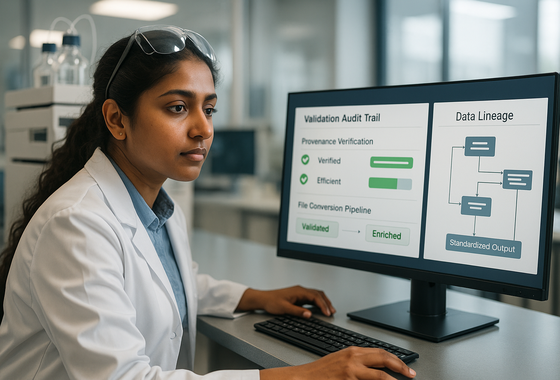
Governed Data Ingestion
Validated, traceable instrument data from plate readers feeding governed data pipelines.

QC Release Throughput
Plate reader QC data streamlined into fleet monitoring and batch release workflows.

IND Acceleration
Bioanalytical plate reader data assembled into governed IND submission packages with full assay provenance.
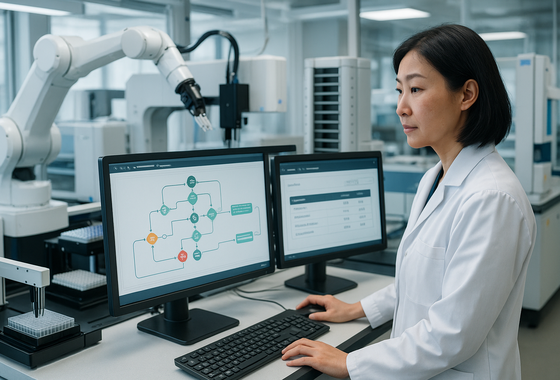
Closed-Loop Lab Automation
Automated plate reader workflows with real-time quality gates and supervised decision points.
Governed Plate Reader Data Starts Here
From multi-mode detection to cross-program intelligence — connect your plate reader through ZONTAL's scientific evidence infrastructure.