
Thermal Analysis: Polymorph Screening Generates Hundreds of Thermograms. Can You Compare Them?
Your solid-state team runs DSC on 200 crystallization conditions per compound. The formulation group tracks glass transition shifts across excipient compatibility studies. Stability scientists monitor decomposition onsets at every time point. All of this data lives in TRIOS, STARe, and Proteus — in formats that can't talk to each other. ZONTAL governs every thermogram, onset temperature, and enthalpy value into a cross-program context graph where thermal fingerprints are always comparable.
Thermal Analysis Data Complexity
DSC, TGA, DTA, and TMA produce complementary thermal characterization data across different heating and cooling programs. Multiple baseline correction algorithms, vendor-specific binary formats, and complex method parameters make cross-instrument comparison unreliable without harmonization — especially for polymorphism screening that requires comparing thermal fingerprints across compounds and batches.
Formulation scientists, solid-state chemists, stability study leads, and QC thermal analysts all depend on this data — each with different workflows and regulatory expectations.
Multi-Technique Landscape
DSC measures heat flow transitions, TGA tracks weight loss events, DTA detects temperature differences, and TMA measures dimensional changes. A single formulation study may require all four techniques across excipient compatibility screens, forced degradation studies, and multiple heating programs.
Vendor-Specific Formats
TA Instruments TRIOS, Mettler Toledo STARe, NETZSCH Proteus, and PerkinElmer Pyris each store thermal data in proprietary formats with different parameter representations and export structures.
Complex Baseline Corrections
Onset, peak, and endset temperature determination depends on baseline algorithms that vary by vendor and software version. Glass transition detection and enthalpy calculations are particularly sensitive to these differences.
Polymorph Screening Scale
High-throughput polymorphism screening generates hundreds of DSC traces per compound. Comparing thermal fingerprints across batches and storage conditions requires governed data with traceable method parameters.
Multi-Technique Thermal Data from Every Analyzer
Thermal analysis data lives in vendor-specific software silos — TA Instruments TRIOS databases, Mettler Toledo STARe archives, Netzsch Proteus files, PerkinElmer Pyris datasets. ZONTAL extracts DSC, TGA, DTA, and TMA data from all major thermal analysis platforms into a governed, searchable format — preserving thermal events, heating programs, and the complete experimental context that scientists need for polymorph characterization, excipient compatibility, and degradation profiling.
Cross-Vendor Thermal Characterization From Day One
- Multi-technique support: DSC, TGA, DTA, and TMA data from the same instrument or different vendors is extracted with technique-aware parameter capture — glass transitions, melting points, decomposition temperatures, and weight loss steps all preserved with their full thermal context.
- Multi-vendor extraction: TA Instruments, Mettler Toledo, Netzsch, and PerkinElmer thermal analyzers are all supported. Each vendor's software — TRIOS, STARe, Proteus, Pyris — is handled with version-aware data extraction.
- Complete thermal programs: Heating rates, cooling segments, isothermal holds, and modulated temperature programs travel with every dataset — enabling method-level comparison across instruments and sites.
- Thermal event fidelity: Onset, peak, and endset temperatures, enthalpies of transition, weight loss percentages, and baseline correction methods are preserved at native precision — no lossy rounding, no metadata loss.
Contextualized Thermal Analysis Data
Raw thermal measurements gain meaning when connected to their full scientific context. ZONTAL links every thermal event — onset temperatures, enthalpies, weight loss steps, glass transitions — to the method, sample, instrument, and experimental conditions that produced it.
Heating/Cooling Programs
Temperature ramp rates, isothermal holds, cooling segments, and modulated programs are captured and linked to every thermal run — enabling method-aware comparisons across instruments.
Thermal Event Parameters
Onset, peak, and endset temperatures, enthalpies of transition, weight loss percentages, and glass transition midpoints are extracted with full traceability to baseline correction methods.
Sample Genealogy
Each thermal measurement traces back to its sample preparation, batch, compound, and program — enabling cross-program queries that connect thermal behavior to formulation and process history.
Context Graph
All thermal metadata feeds into ZONTAL's scientific context graph, connecting transition temperatures, polymorphic forms, and degradation profiles across the portfolio.
Cross-Program Thermal Intelligence
With thermal analysis data governed and contextualized, ZONTAL enables analytical intelligence that spans instruments, methods, sites, and programs.
Polymorph Screening Across Programs
Your solid-state chemist screens 200 crystallization conditions for a new API. ZONTAL indexes every DSC trace against the compound's polymorph inventory — flagging conditions that produced known Form I, the metastable Form II, or a thermal signature that doesn't match any cataloged form — with full lineage to sample preparation and instrument qualification.
Batch-to-Batch Thermal Comparison
When the first GMP batch from your toll manufacturer shows a melting point 0.8°C lower than development batches, ZONTAL overlays the DSC curves with matched heating rates and sample masses — distinguishing genuine polymorphic differences from method-induced artifacts before the deviation investigation begins.
Stability-Indicating Thermal Events
Your stability lead reviews 6-month accelerated data and spots a new endotherm at 85°C that wasn't present at time zero. ZONTAL's trending dashboard shows when it first appeared, at which storage conditions, and whether the XRD data from the same pull shows a corresponding new diffraction peak — all in one governed view.
Impurity & Purity Profiling
DSC purity analysis on incoming API lots from three suppliers shows batch-to-batch variation. ZONTAL harmonizes the purity calculations across TA Instruments TRIOS and Mettler Toledo STARe results, applying consistent baseline methods so your QC manager can compare suppliers with confidence.
Supported Thermal Analysis Platforms
ZONTAL maintains converters for the thermal analysis platforms used across pharma R&D and manufacturing.
| Vendor | Models / Platforms | Software | Techniques |
|---|---|---|---|
| Mettler Toledo | DSC 3+, TGA/DSC 3+, DMA 1 | STARe | DSC, TGA, DMA |
| NETZSCH | DSC 214, TG 209, STA 449, DMA 242 | Proteus | DSC, TGA, DTA, DMA |
| PerkinElmer | DSC 8000, TGA 8000, DMA 8000 | Pyris | DSC, TGA, TMA, DMA |
| TA Instruments | Discovery DSC, TGA 5500, Discovery TMA, DMA 850, ARES-G2 | TRIOS | DSC, TGA, TMA, DMA, Rheology |
Explore Connected Capabilities
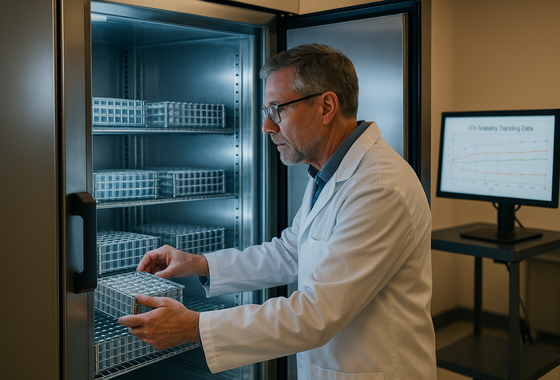
Stability Intelligence
Thermal stability data feeds predictive shelf-life models across your portfolio.

CMC Readiness
Governed thermal characterization evidence packages for regulatory submissions.

Governed Data Ingestion
Thermal analysis data flowing through governed ingestion pipelines with full instrument and method traceability.
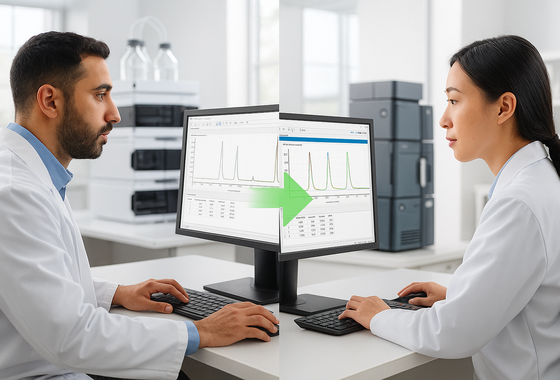
Tech Transfer
DSC and TGA methods transferred between sites with matched thermal parameters and comparable results.
Governed Thermal Analysis Data Starts Here
From DSC extraction to cross-program polymorph intelligence — connect your thermal analysis through ZONTAL's scientific evidence infrastructure.