
Regulatory-Grade Data Packages from Governed Scientific Context
CMC readiness demands comparability evidence, qualified methods, and complete characterization data — assembled from CDS, LIMS, ELN, and stability databases with full traceability to the source instrument. ZONTAL governs that entire chain, from process parameter to ICH CTD section.
CMC Evidence Packages Are Assembled Manually
A typical CMC filing draws data from 10+ systems — CDS, LIMS, ELN, stability databases, QC platforms, and site-specific archives. Manual assembly takes months per program, and version control across manufacturing sites is fragmented. Every process change triggers new comparability studies, and at portfolio scale the validation workload compounds faster than teams can track it.
“CMC is arguably the single biggest bottleneck. Every process change triggers comparability studies that depend on data scattered across a dozen systems.”
Four Steps to Filing-Grade Packages
Each stage of the ZONTAL platform contributes a governed step — from raw data extraction through comparability analytics to automated Module 3.2 assembly.
Governed Data Extraction
Validated connectors ingest analytical results, method parameters, and instrument metadata from CDS, LIMS, and ELN systems. Every data point carries a full audit trail back to the source instrument — no manual export, no copy-paste, no broken provenance chains.
Scientific Context Linking
Batches, methods, stability data, and characterization results are linked into a scientific context graph. The method-to-drug-product qualification matrix, batch-to-characterization lineage, and cross-site identity reconciliation are built automatically — giving every data point its regulatory meaning.
Comparability Analytics & Method Transfer Tracking
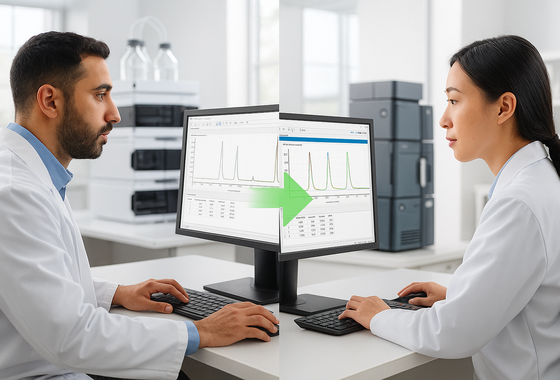
Statistical equivalence analysis compares pre/post-change parameters across every process modification. Method transfer qualification tracks each analytical method from source site through receiving-site validation — with revalidation scheduling, equipment checks, and training completion status in a single view.
Module 3.2 Assembly & Gap Detection
Automated filing assembly maps governed data to ICH CTD sections, cross-references comparability evidence and method qualifications, and scores completeness per section. Gap detection algorithms flag missing characterization, incomplete protocols, and untraced method chains before they surface during regulatory review.
Measurable Impact on Filing Timelines
Governed data assembly and automated gap detection compress the CMC readiness cycle at every stage.
How CMC Data Builds on Itself
CMC Readiness compounds from four capabilities working together — each adding capability the next one builds on.
Regulatory-grade data packages require governed data with full
traceability at every stage.
Evaluate readiness with
the five-question framework →

Integration Industrialization
Data Hub connects 150+ vendors and 400+ instrument models through governed Integration Factories. Every data point is validated and traced from source instrument to scientific context with full provenance. Governed ingestion from analytical instruments, LIMS, and ELN brings every characterization data point in with full audit trail and provenance.
- 150+ vendor instruments supported
- 400+ instrument models connected
- 8 core techniques · 80+ variants
- Analytical, LIMS, and ELN data ingested with characterization context

Scientific Context & Lineage
Digital Lab and Platform Modules build the scientific context graph — ontology mapping, cross-system identity reconciliation, and full lineage from instrument through result to insight. Method-to-drug-product qualification matrix, batch-to-characterization lineage, and cross-site reconciliation connect every comparability study.
- Ontology mapping across all data domains
- Cross-system identity reconciliation
- Full lineage graph: instrument → method → sample → result
- Method-to-drug-product qualification matrix with cross-site reconciliation

Scientific Intelligence
Cross-program analytics surfaces trends, anomalies, and predictive signals that manual review misses — proven AI capabilities running on governed, validated scientific data. Statistical equivalence analysis, cross-program comparability patterns, and gap detection algorithms surface filing risks before they become regulatory holds.
- Cross-program trend detection and comparison
- Anomaly detection and signal identification
- Predictive modeling on governed data
- Statistical equivalence analysis and filing completeness scoring

AI-Enabled Decisions
AI-assisted workflows consume governed data, scientific context, and intelligence to generate actionable outputs — with configurable oversight from full autonomy to human-in-the-loop approval gates. Automated Module 3.2 assembly pulls governed data, cross-references comparability evidence, and generates filing-ready packages with completeness scoring.
- Guided workflow orchestration
- Configurable oversight — from approval gates to full autonomy
- Role-based views and reporting
- Automated CTD Module 3.2 assembly with filing gap detection
Validated by Industry Leaders
Published content from pharmaceutical and agrochemical companies solving real scientific data challenges.


How This Outcome Applies Across Scientific Domains
Reaction Data Feeding CMC Assessments
NMR, mass spectrometry, and chromatography data from synthetic chemistry workflows — reaction monitoring, structural characterization, and method development — feeding directly into CMC readiness assessments. The context model links reaction conditions to analytical results to filing-ready comparability evidence.
- NMR structural characterization linked to compound registration
- LC-MS and HPLC method development data with full lineage
- Reaction monitoring data contextualized for process understanding
- Method transfer records flowing into CMC comparability packages

Trusted by 6 of the 10 largest pharmaceutical companies in the world








And leading biotechs and agrochemical companies
Build the Foundation for CMC Readiness
Explore how comparability studies, method qualifications, and gap detection will work on governed data — and assess your current infrastructure readiness.