
Preserve Every Notebook. Protect Every Discovery.
ELN (Electronic Lab Notebook) preservation and archiving extracts structured content from proprietary electronic lab notebooks, preserves full scientific context and metadata and audit trail, and delivers searchable, vendor-neutral archives — so decades of R&D IP survive every platform transition.
ELN Transitions Put Years of R&D IP at Risk
When organizations switch ELN vendors — BIOVIA to Benchling, Dotmatics to Revvity, or any other transition — years of experimental data, methods, and institutional knowledge become trapped in proprietary formats. Manual PDF-print archiving loses structure, metadata, and searchability. Regulatory requirements (21 CFR Part 11, EU Annex 11) demand long-term access to original electronic records, not flattened printouts.
Proprietary Format Lock-In
Each ELN stores experiments in a unique, proprietary schema. Content exported as PDF loses embedded data tables, reaction schemes, and compound references.
Lost Searchability
Scientists cannot find prior experiments, methods, or results once ELN content is archived as unstructured files. Institutional knowledge becomes invisible.
Regulatory Exposure
Regulatory agencies expect retrievable electronic records with full audit trails. Flat file exports and screenshot archives fail inspection scrutiny.
IP Defense Without Evidence
Patent claims and IP disputes require retrievable, time-stamped experimental records with intact provenance. When notebooks are archived as flat PDFs, legal teams cannot reconstruct the chain of invention — leaving the organization unable to defend priority dates or demonstrate prior art.
Multi-Year Migration Timelines
Legacy ELN decommissioning projects routinely stretch beyond initial estimates, keeping expensive license and infrastructure costs running in parallel.
Governed Extraction to Vendor-Neutral Archives
Two principles work together: Integrate extracts structured content from proprietary ELN formats; Contextualize preserves it in searchable, vendor-neutral archives with complete scientific context and lineage.

Governed Extraction from ELN Systems
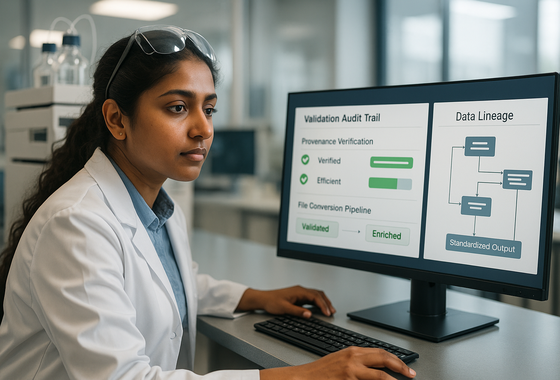
Data Hub connectors parse proprietary ELN formats — Revvity Signals, Benchling, IDBS, BIOVIA, CambridgeSoft, and others — extracting structured content with full metadata: experiment hierarchies, embedded files, reaction data, and audit trails.
- Connectors for major ELN platforms
- Structured extraction preserves data tables and embedded objects
- Metadata mapping retains experiment context and authorship
- Audit trail continuity from source system to archive

Long-Term Preservation with Full Context
Data Preservation provides vendor-neutral, searchable archives. Chemistry Hub preserves chemical structures and compound identifiers. Methods Hub retains SOPs and method references. Every archived record maintains its full scientific lineage.
- Vendor-neutral archive format with governed lifecycle
- Chemical structure and compound identity preservation
- SOP and method reference linkage
- Full-text search across all archived ELN content
Products You Can Deploy Today
If your organization uses Data Hub or Data Preservation, you already have the foundation for governed ELN archiving. ELN Archive connects directly to both.
Data Preservation
The foundation deployed at scale. Long-term governed storage with lifecycle management, vendor-neutral formats, electronic signatures, and provenance tracking at every transition. Every piece of data that enters ZONTAL flows through Data Preservation.
Data Hub
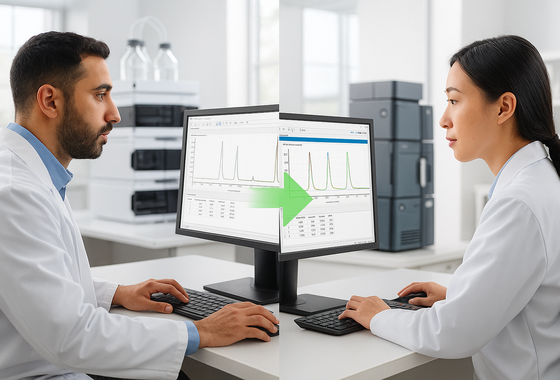
Conversion and normalization engine for lab data. Parses proprietary formats, maps metadata, enriches content, and delivers structured data into Data Preservation with full audit trail continuity.
ELN Archive
Purpose-built archival engine for Electronic Lab Notebooks. Extracts complete experiments — text, tables, attachments, electronic signatures, audit trails — from legacy and active ELN systems, preserving scientific context and 21 CFR Part 11 compliance throughout.
Beyond Archiving: Scientific Context That Compounds
Governed ELN preservation goes beyond backup. When notebook content enters the scientific context graph with full lineage, it becomes searchable, reusable, and AI-ready — not locked in a file system. Every preserved experiment is a data point that AI models can learn from.
Full Lineage Across Systems
Every preserved experiment links back to its original ELN source, author, date, and audit trail — and forward to any downstream analysis, report, or regulatory submission that references it.
Cross-System Scientific Search
Scientists search across all preserved ELN content alongside active lab data. Find prior experiments, methods, and results by compound, technique, project, or keyword — regardless of which ELN originally held the record.
Regulatory-Grade Evidence Retrieval
When auditors or regulatory agencies request historical records, retrieve complete electronic experiments with full metadata and audit trail — not PDFs stripped of scientific context.
IP Defense & Patent Evidence
Legal and paralegal teams retrieve time-stamped experimental records with intact chain-of-custody to defend patent claims, establish priority dates, and demonstrate prior art. Structured archives with provenance replace the scramble through unindexed file shares.
AI-Ready Training Data
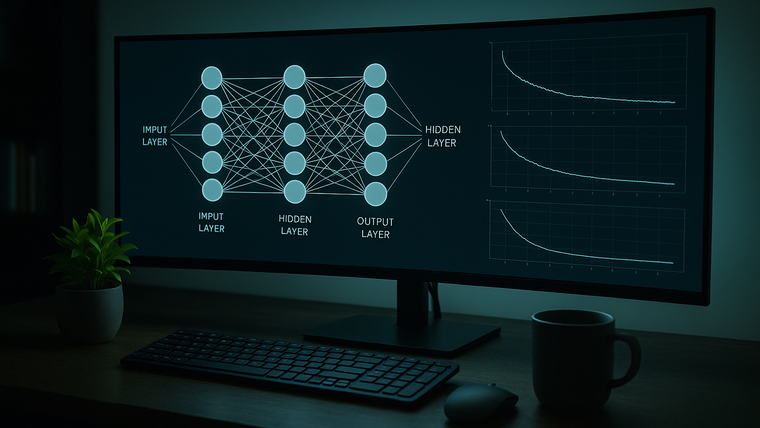
Preserved ELN content — structured, contextualized, and linked to instrument data — becomes training data for AI-assisted experiment design, predictive method development, and scientific literature search. Without governed preservation, this historical corpus is invisible to machine learning pipelines.
Every preserved notebook deepens the scientific context graph that powers AI-Enabled Decisions — from predictive method selection to automated regulatory cross-referencing. Preservation is the first step toward AI readiness for historical R&D data.
Operational Results from ELN Preservation
Governed ELN preservation transforms a costly, risky migration project into a repeatable infrastructure capability.
Structured extraction and automated metadata mapping reduce ELN decommissioning timelines compared to manual PDF-print approaches.
Full-text search across all preserved ELN content — by compound, experiment type, author, method, or project — replaces unsearchable file dumps.
Electronic records with complete audit trails and metadata satisfy 21 CFR Part 11 and EU Annex 11 requirements for long-term record retention.
Validated by Industry Leaders
Published content from pharmaceutical and agrochemical companies solving real scientific data challenges.

Secure, Preserve, and Leverage Data with ZONTAL
How scientific evidence infrastructure protects R&D investments, preserves institutional knowledge, and turns governed data into competitive advantage.
From Archiving to Scientific Intelligence
ELN preservation at Integrate and Contextualize creates searchable, governed records. Analyze turns that historical corpus into cross-experiment intelligence and AI-ready training data.
Foundation: Data Preservation + Data Hub
Governed extraction pulls structured content from proprietary ELN formats. Data Hub normalizes metadata and audit trails. Digital Lab builds the scientific context graph — linking experiments to instruments, methods, compounds, and projects with full lineage. This is your current ELN preservation infrastructure.

Next: Cross-Experiment Intelligence
With preserved ELN content linked into the scientific context graph, Analyze enables cross-experiment trend analysis, method development pattern recognition, and AI-assisted literature search across your entire historical R&D corpus — turning archived notebooks into a compounding knowledge asset.
Trusted by 6 of the 10 largest pharmaceutical companies in the world









And leading biotechs and agrochemical companies
Build the Foundation for ELN Preservation
Preserve decades of R&D knowledge through governed extraction, vendor-neutral archiving, and full scientific context. Talk to our team about protecting your organization's IP during ELN transitions.