
Process Digital Twins
Simulate, predict, and optimize lab processes before a single sample runs. Process digital twins compound from governed data, scientific context, and predictive models — delivering model-guided optimization with full traceability.
Process Optimization Without Prediction
Pharma process development relies on physical experimentation — running every parameter combination on real instruments with real materials. Without computational models, optimization is slow, expensive, and constrained by lab capacity.
Trial-and-Error Optimization
Each process parameter change requires a physical run. Design of Experiments (DOE) matrices grow exponentially, consuming weeks of instrument time and expensive reagents.
Scale-Up Blind Spots
Processes optimized at bench scale behave differently at pilot and manufacturing scale. Without predictive models, scale-up failures are discovered late — after materials and time are committed.
Disconnected Process Knowledge
Method development data lives in Electronic Laboratory Notebooks (ELNs), Laboratory Information Management Systems (LIMS), batch records, and analyst notebooks. Cross-campaign process understanding stays locked in individual scientists' expertise.
No Feedback Loop
Results from previous campaigns rarely inform future experiments systematically. Each project restarts optimization from scratch instead of compounding on historical data.
Governed Models on Governed Data
Process digital twins compound from four principles. Governed instrument data feeds scientific context, which trains predictive models that guide supervised process optimization — all on traceable, auditable infrastructure.
Foundation: Governed Process Data
Integration Factories deliver validated, traceable data from every instrument and system involved in the process. Parameters, conditions, and results flow into the scientific context graph automatically. Adapters include simulation mode, so the full data pipeline for all process instruments can be built and verified in parallel — without waiting for hardware access on each instrument queue.
Context: Cross-Campaign Lineage
The scientific context model links process parameters, analytical results, material properties, and environmental conditions across campaigns, sites, and scales — creating the training dataset digital twins need.
Intelligence: Predictive Process Models
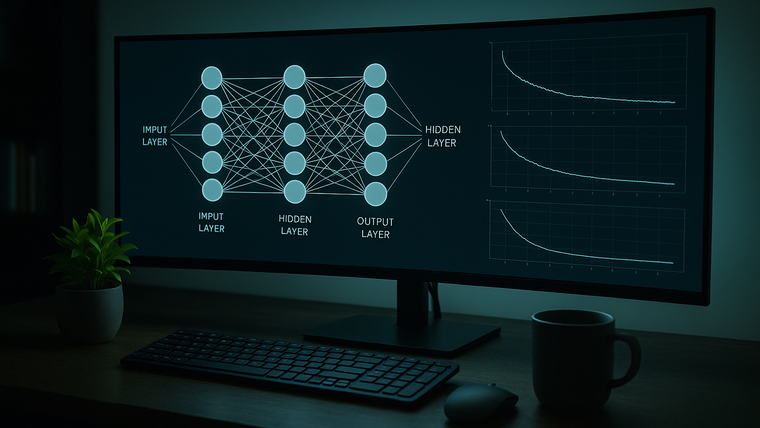
Scientific Intelligence builds and validates predictive models on governed historical data. Multivariate analysis and mechanistic models identify parameter-outcome relationships across the entire process space.
Decisions: Model-Guided Optimization
AI-assisted workflows propose optimized parameter sets, simulate expected outcomes, and route recommendations through configurable approval gates. You set the oversight level — the platform executes.
Predictive Precision, Governed Execution
Process digital twins reduce physical experimentation while improving outcomes — every prediction traceable to source data, every model decision auditable.
Principles Compounding to Digital Twins
Process digital twins are the compounding reward of four principles working together. No principle can be skipped — each provides essential capability for the next.
Digital twin fidelity depends on governed, contextualized data flowing
through all principles.
Evaluate readiness with the
five-question framework →

Integration Industrialization
Data Hub connects 150+ vendors and 400+ instrument models through governed Integration Factories. Every data point is validated and traced from source instrument to scientific context with full provenance. Governed instrument connectors deliver validated process data — reaction parameters, analytical measurements, environmental conditions — from every development instrument.
- 150+ vendor instruments supported
- 400+ instrument models connected
- 8 core techniques · 80+ variants
- Real-time process parameter capture from development instruments

Scientific Context & Lineage
Digital Lab and Platform Modules build the scientific context graph — ontology mapping, cross-system identity reconciliation, and full lineage from instrument through result to insight. The context graph links process parameters to outcomes across campaigns, scales, and sites. Every data point carries full lineage from raw measurement to model training input.
- Ontology mapping across all data domains
- Cross-system identity reconciliation
- Full lineage graph: instrument → method → sample → result
- Parameter → outcome lineage across campaigns and scales

Scientific Intelligence
Cross-program analytics surfaces trends, anomalies, and predictive signals that manual review misses — proven AI capabilities running on governed, validated scientific data. Predictive models trained on governed historical data — multivariate analysis, mechanistic models, and machine learning — reveal parameter-outcome relationships.
- Cross-program trend detection and comparison
- Anomaly detection and signal identification
- Predictive modeling on governed data
- Parameter sensitivity analysis and cross-campaign pattern detection

AI-Enabled Decisions
AI-assisted workflows consume governed data, scientific context, and intelligence to generate actionable outputs — with configurable oversight from full autonomy to human-in-the-loop approval gates. Model-guided workflows recommend optimized parameters, simulate expected outcomes, and route decisions through configurable approval gates — from human-supervised to fully autonomous.
- Guided workflow orchestration
- Configurable oversight — from approval gates to full autonomy
- Role-based views and reporting
- Model-recommended parameter sets with supervised optimization workflows
Each Outcome Compounds on the Others
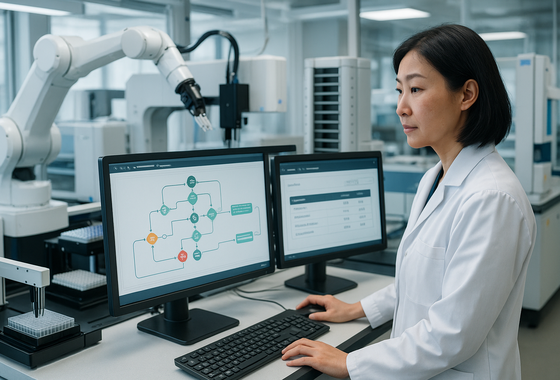
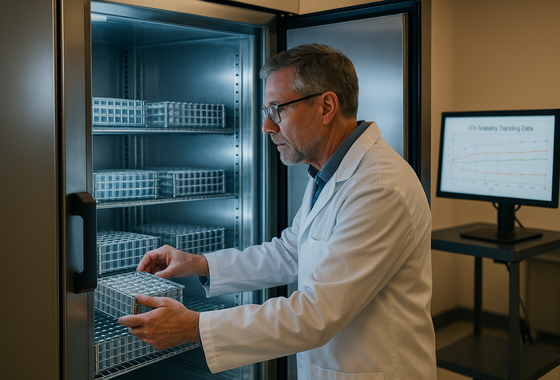
Process digital twins compound on closed-loop automation, stability intelligence, IND acceleration, and CMC readiness — each principle providing the governed data and scientific context that predictive models require. Explore how the same platform powers related outcomes.


Trusted by 6 of the 10 largest pharmaceutical companies in the world










And leading biotechs and agrochemical companies
Build the Foundation for Process Digital Twins
Digital twins require governed data, scientific context, and validated models across all principles. Start building the infrastructure today so your data is ready.