










Custom ROI Model
Project-based vs. factory-based cost models calibrated to your number of instrument classes, variants, and sites. See where the compounding curve bends in your favor.
The era of relying on a few blockbusters is giving way to portfolio-scale operations. Merck has 30+ programs in Phase 3. Pfizer is planning ~20 pivotal starts in 2026. AstraZeneca targets 20 new medicines by 2030. The bottleneck is the manual, non-compounding work required to connect every instrument, vendor format, and lab system.
Trusted by 6 of the 10 largest pharmaceutical companies in the world
And leading biotechs and agrochemical companies
Based on measured gains at enterprise pharmaceutical deployments
Project-based vs. factory-based cost models calibrated to your number of instrument classes, variants, and sites. See where the compounding curve bends in your favor.
A practical path from first factory asset to fleet-scale integration, with milestones and expected compounding returns at each stage.
Technical architecture overview showing how Data Converter and Instrument Adapter Factories connect to your existing lab stack - from LIMS (Laboratory Information Management System) to ELN (Electronic Lab Notebook) to cloud data lake.
“What used to be a complex, multiple-step, multi-tool process is now as simple as a couple of clicks away from the protocoling tool.”
Custom analysis for your organization. We model your integration economics, map your acceleration roadmap, and show you the reference architecture behind factory-scale lab integration.
We'll review your inputs and respond with a tailored analysis.
See how integration factories drive measurable results across your lab operation.
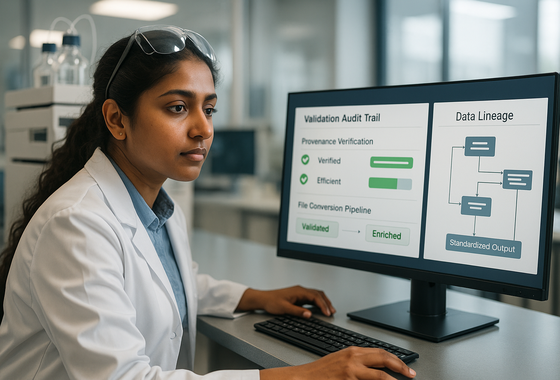
Validated, traceable instrument data from every vendor and format

Fleet-level batch release monitoring across sites and instruments
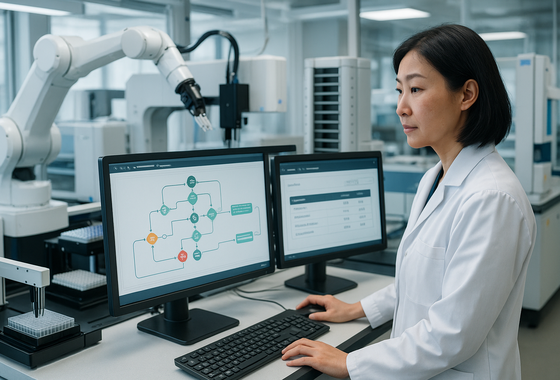
Configurable autonomy with supervised instrument orchestration
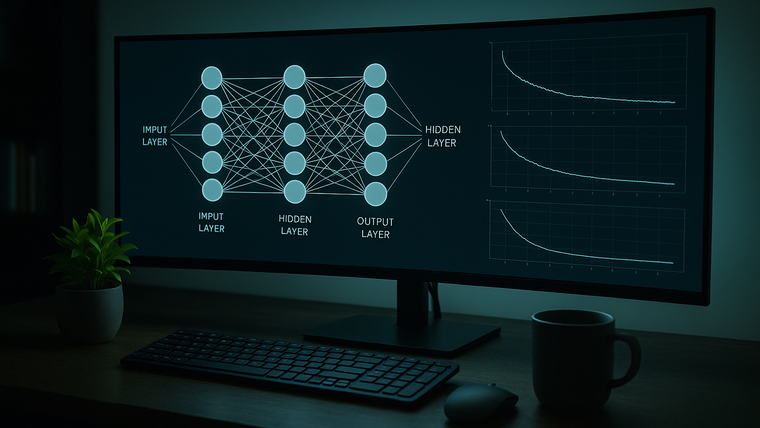
Five questions to evaluate whether your evidence infrastructure is ready for AI
Your pipeline is accelerating. Your integration model should be too.
Get the Executive Brief