








Weeks to Months Per Integration
Each instrument requires custom scripts, manual configuration, and vendor-specific tooling. The backlog grows faster than the team can deliver.
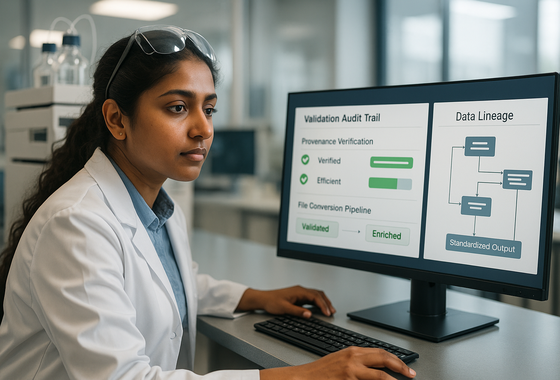
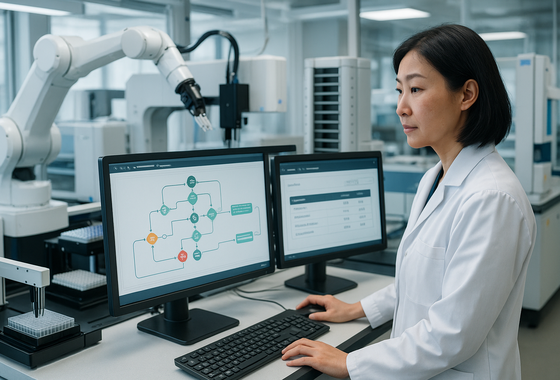
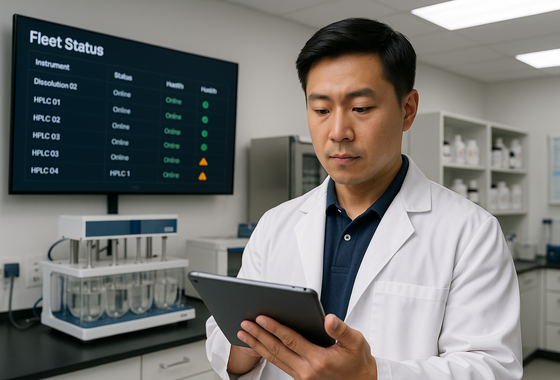
Your instrument fleet spans vendors, sites, and techniques. ZONTAL industrializes connectivity — governed factories onboard new instruments in days, fleet dashboards monitor health in real time, and every data point flows through validated pipelines.
Trusted by 6 of the 10 largest pharmaceutical companies in the world
And leading biotechs and agrochemical companies
Multi-site instrument fleets generate complexity at every layer — onboarding, monitoring, data validation, and service orchestration. Here's what lab operations teams manage every day.
Each instrument requires custom scripts, manual configuration, and vendor-specific tooling. The backlog grows faster than the team can deliver.
Integration expertise lives in individual heads. When a key analyst leaves, the team loses months of accumulated knowledge - and onboarding starts over.
Every site operates independently. There's no single view of server health, device status, or data ingest rates across the enterprise instrument estate.
Instruments run production around the clock. There are no maintenance windows for integration validation. Every new adapter build competes with analytical throughput for access to the same hardware.
Based on measured gains at enterprise pharmaceutical deployments
Want a custom analysis for your lab operations infrastructure?
Get a tailored Executive Brief with fleet efficiency modeling, instrument ROI analysis, and operations scaling roadmap.
Get the Executive BriefLab operations teams build the data foundation that AI depends on. Every governed instrument integration, every validated data pipeline, every reconciled fleet record feeds the scientific context graph — the structured, traceable dataset that AI models require for predictive maintenance, anomaly detection, and closed-loop automation.
Fleet-wide performance data — system suitability trends, calibration drift, error frequencies — enables AI-assisted predictive maintenance. Address instrument issues before they cause OOS events or production delays.
When a new instrument model arrives, AI recommends integration configurations based on similar instruments already in the fleet — reducing onboarding from days to hours as the fleet grows.
Governed instrument data is the prerequisite for closing the loop between experiment design, execution, and analysis. Without validated, traceable data pipelines, automation stays open-loop — and AI stays theoretical.
Every instrument your team connects today compounds into the AI-ready scientific context graph that powers AI-Enabled Decisions tomorrow.
Assess your instrument estate, integration maturity, and data flow complexity. A 5-minute self-assessment that maps where you stand and what to prioritize first.
Watch the Fleet Dashboard, factory builds, and governed data pipelines running on real instrument data. See how onboarding compounds with every build.
30-minute session with your team. We map your instrument complexity to a phased onboarding plan — sites, techniques, and timelines.